

Best Materials for Outdoor Patio Spaces
- Amber Creek Design

- Jun 25
- 6 min read
A patio looks simple on paper until you picture how it will actually be used. Morning coffee in bare feet. A long dinner that drifts past sunset. Kids cutting across the yard with wet feet from the pool or dogs racing in from the grass. Choosing the best materials for outdoor patio living is less about picking a surface and more about shaping how your backyard feels, performs, and ages.
In Colorado, that decision carries even more weight. Intense sun, freeze-thaw cycles, snow, wind, and dry conditions can turn a beautiful patio into a high-maintenance headache if the material is wrong for the setting. The right choice should complement your home, feel good underfoot, and hold up through every season without asking for constant repair.
What makes the best materials for outdoor patio design?
The best patio materials do not come down to one universal winner. They depend on how you want to live outside and how the space connects to the rest of your property. A quiet courtyard for two asks something different than a large entertainment patio with an outdoor kitchen, fire feature, and multiple seating zones.
We usually guide homeowners to think about five things at once: appearance, comfort, durability, maintenance, and how the material supports the full design. A patio should not feel like an isolated slab dropped into the yard. It should feel grounded in the architecture of the home and natural to the landscape around it.
That is why material selection is rarely just a style decision. Texture affects safety. Color affects heat. Joint spacing affects maintenance. Even the scale of the material changes how spacious or formal the patio feels.
Natural stone for timeless character
Natural stone remains one of the most compelling choices for a premium patio because it brings depth and authenticity that manufactured materials often try to imitate. Bluestone, flagstone, and limestone each create a different mood, but all offer a sense of permanence that works beautifully in a well-designed outdoor living space.
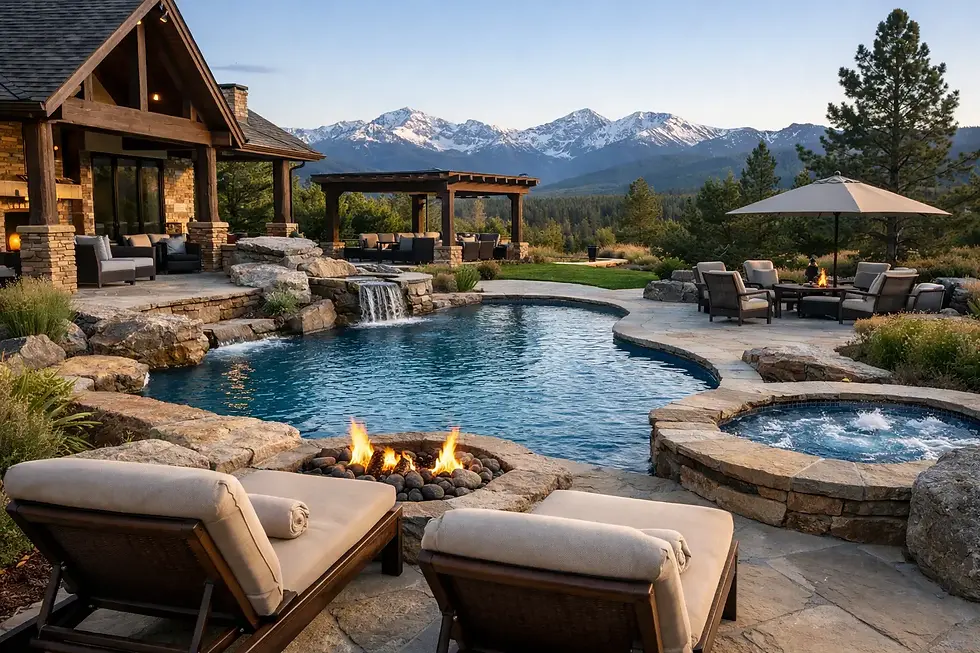
For Boulder County homes, natural stone often feels especially at home. It sits comfortably against mountain views, native plantings, and architecture that leans warm, grounded, and organic. It can make a backyard feel established from day one, as though it belongs to the land rather than simply covering it.
The trade-off is cost and installation complexity. Natural stone is typically more expensive than pavers or poured concrete, and great results depend heavily on craftsmanship. Stone also varies piece to piece, which is part of its appeal, but it requires a careful design eye to make the finished patio feel intentional rather than uneven.
Flagstone is a favorite for homeowners who want a relaxed, natural look. It works well in spaces that blend with gardens, water features, and winding paths. Bluestone tends to feel a bit more tailored and architectural, which can be ideal for homes with clean lines or more formal entertaining areas. Limestone can feel elegant and light, though some varieties need more consideration in colder climates and around staining.
Concrete pavers for versatility and structure
If natural stone is prized for its one-of-a-kind character, concrete pavers are often chosen for their flexibility and consistency. A well-made paver patio can be sophisticated, durable, and highly adaptable, especially when the design calls for crisp geometry, defined zones, or a smooth transition from patio to walkways, steps, and outdoor kitchen areas.
Pavers come in a wide range of colors, textures, and sizes, which makes them useful for tying multiple outdoor elements together. They can support a modern look, a classic layout, or something in between. For larger backyard transformations, that design flexibility matters.
They also perform well in climates with freeze-thaw cycles because individual units can move slightly without the kind of cracking you often see in poured surfaces. If damage does occur, repairs are generally more contained since a section can be reset or replaced.
That said, not all pavers feel premium. Lower-end products can look flat or overly uniform. The best results come from selecting pavers with subtle variation, a refined color palette, and an installation pattern that suits the scale of the home. This is where thoughtful design separates a polished outdoor room from a patio that feels purely utilitarian.
Poured concrete for clean simplicity
Poured concrete appeals to homeowners who want a streamlined look and a more restrained price point. It can create a clean, modern foundation for outdoor furniture, dining areas, and open lounging space. When detailed well, concrete can feel elegant in its simplicity.
It also offers flexibility in shape, which can be helpful for contemporary landscapes or patios that need to wrap around existing conditions. Finishes and color treatments can soften the basic look, and scoring can add rhythm and visual structure.
Still, concrete has limitations, especially in Colorado. Over time, cracking is a realistic concern. Some movement is expected, but visible cracks can disrupt the look of the space. Surface temperature is another factor. Darker concrete can become quite hot in direct summer sun, which matters if the patio is used barefoot or by young children.
For some projects, concrete is absolutely the right answer. It can be beautiful when the architecture supports it and the homeowner understands the maintenance and aging pattern. It is simply not the most forgiving material in every setting.
Brick for warmth and classic appeal
Brick patios bring a certain intimacy that few materials can match. They feel inviting, established, and human in scale. On the right home, especially one with traditional architecture or historic character, brick can create a backyard that feels deeply connected to the house.
Brick also ages with charm. Slight wear often adds to its appeal rather than diminishing it. That makes it especially attractive for homeowners who appreciate materials that develop character over time.
The caution with brick is that it does not suit every design direction. In more modern landscapes, it can feel too traditional unless balanced carefully. Some brick surfaces can also become uneven over time if the base is not expertly prepared. Color consistency and long-term staining should be part of the conversation as well.
Gravel and decomposed granite for casual spaces
For secondary patios, garden seating areas, or informal gathering spaces, gravel and decomposed granite can work beautifully. They offer a softer, more relaxed presence in the landscape and can be an excellent fit for pathways, fire pit zones, or tucked-away retreats.
These materials are often more budget-friendly and visually quiet, which can help a landscape feel natural rather than overbuilt. They also drain well, which is useful in certain applications.
But they are not ideal for every patio experience. Furniture can wobble. Loose material migrates. Snow removal is more complicated. For a primary patio used for dining, entertaining, and daily circulation, most homeowners looking for a polished, long-term outdoor living space prefer a more stable surface.
How to choose the best materials for outdoor patio comfort and longevity
A patio should be beautiful in photos, but what matters more is how it supports real life. If your family spends evenings dining outside, surface stability matters. If you host often, the material needs to anchor furniture well and flow naturally into adjacent spaces. If relaxation is the priority, comfort underfoot and visual warmth may matter more than formal precision.
Sun exposure should be part of the decision early. Some materials absorb and hold more heat than others. Color makes a difference too. Lighter tones can keep a patio more comfortable during bright Colorado afternoons, while darker surfaces may create stronger contrast and drama but feel hotter.
Maintenance deserves an honest look. Many homeowners say they want a low-maintenance patio, but what that means varies. Some are happy with occasional sealing if the material is exceptional. Others want something that asks very little year after year. Neither is wrong, but the expectation should match the material.
The surrounding design matters just as much. A patio works best when it is considered alongside retaining walls, steps, lighting, planting, shade structures, and any features that shape how people move and gather. That is why the best material on its own can still feel underwhelming if the overall plan is fragmented.
At Amber Creek Design, that full-picture approach is often what changes the outcome. The patio material is not selected in isolation. It is chosen as part of a complete outdoor environment built around how the family wants to spend time outside.
The best patio material is the one that fits your life
If you want the most natural, elevated look and value lasting character, natural stone is hard to beat. If you want design flexibility, durability, and a polished finish across a larger outdoor plan, pavers are often the strongest choice. If clean simplicity and budget control matter most, poured concrete may make sense. If your home calls for warmth and tradition, brick can be a beautiful answer.
The real goal is not choosing the most popular material. It is choosing the one that makes your patio feel effortless on an ordinary Tuesday and special on a full summer evening with friends around the table. When the material supports both, the backyard stops feeling like extra square footage and starts feeling like part of home.


Comments