

The Backyard Retreat Design Process, Made Personal
- Amber Creek Design

- 4 days ago
- 6 min read
A beautiful backyard rarely begins with a wish list. It begins with a moment: coffee in the sun before the house wakes up, a long dinner that drifts past dusk, grandchildren racing across the lawn, or a quiet place to exhale after a full week. A thoughtful backyard retreat design process turns those moments into a setting that feels natural to your home, your property, and the way your family actually lives.
For Boulder County homeowners, that process also needs to respect the realities of the Front Range: intense sun, shifting temperatures, mountain views worth preserving, and a landscape that should feel inviting in every season. The goal is not to fill a yard with features. It is to create a destination you will keep choosing, day after day.
Start With the Life You Want Outside
The most successful outdoor spaces are designed around routines, not products. A patio, deck, fire feature, or outdoor kitchen can all be exceptional on their own. But when they are selected before the larger experience is understood, the result can feel fragmented: a handsome grill station with nowhere comfortable to gather, a beautiful patio that bakes in the afternoon, or a fire pit too far from the kitchen to become part of an evening.
The first conversation should focus on how you want the backyard to feel and function. Do you picture relaxed family dinners several nights a week, larger celebrations with friends, or a private garden escape? Does the yard need room for children and dogs now, with a more entertaining-focused role later? Are you drawn to clean architectural lines, a layered naturalistic garden, or a warm, lodge-inspired atmosphere?
These answers shape everything that follows. They establish priorities, reveal conflicts between uses, and help determine where a meaningful investment will have the greatest impact. A homeowner who loves to host may need generous circulation and a kitchen that keeps the cook connected to guests. Someone craving restoration may value privacy, water, shade, and a tucked-away seating area over a large open terrace.
Read the Property Before Drawing the Plan
Every yard has its own opportunities and constraints. Before design begins in earnest, the site needs to be understood as a whole: its grades, views, sun exposure, drainage patterns, access points, mature trees, and connection to the home.
In Boulder, Louisville, and the foothill communities, a few feet can change the experience of a space. A patio positioned for morning sun may be too exposed by late afternoon. A deck can capture a view while overlooking a neighbor's windows. A low area that looks harmless in July may collect water during spring runoff. Addressing these realities early protects both the design and the finished investment.
This is also when the relationship between indoors and outdoors comes into focus. The best retreats do not feel like a separate project beyond the back door. They extend the home’s architecture, circulation, and personality. A kitchen door may suggest the natural location for dining. A family room view may become the visual anchor for a water feature or garden. A new transition from the house can make the entire backyard feel more accessible.
The Importance of a Master Plan
Not every homeowner wants to build every feature at once, and that is perfectly reasonable. A master plan creates a cohesive long-range vision, even when construction happens in phases.
For example, the first phase may be a patio, shade structure, and landscape lighting. The plan can still reserve the right location, utilities, and circulation for a future outdoor kitchen, pond, or expanded seating area. Without that foresight, later additions often require expensive rework or look like afterthoughts.
A complete plan also clarifies where to spend more and where restraint is wise. Premium stone or custom millwork may be the right choice for a focal gathering space, while a quieter planting area can provide balance without competing for attention. Good design is not about making every square foot elaborate. It is about giving each area a clear purpose.
Shape Outdoor Rooms Around Natural Movement
A retreat should make it easy to move through the evening. Guests arrive from the house, set down a drink, gather near food, settle into conversation, and perhaps end the night around a fire. Families move differently at breakfast than they do at a weekend celebration. The design needs to support these rhythms without feeling overplanned.
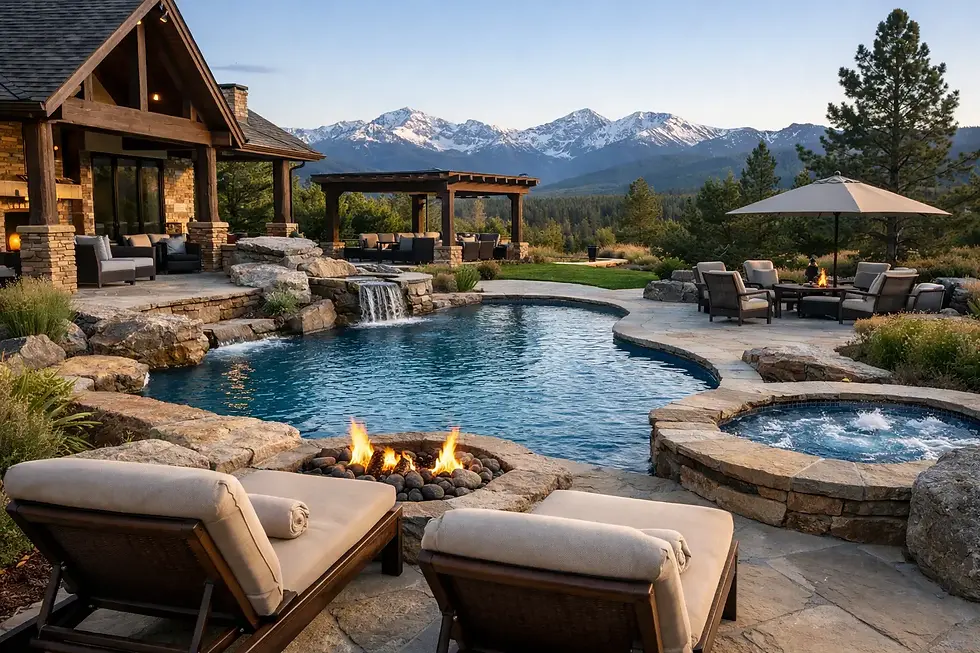
This is where outdoor rooms become especially valuable. Rather than one large hardscape surface, a backyard can offer connected zones: a dining terrace near the home, a lounge oriented toward the view, a fireside corner for late-night conversation, and a garden path leading to a more private bench or water feature. Each space has its own mood, but the materials and sightlines keep the overall experience unified.
Scale matters. A dining area should allow chairs to pull out comfortably. A lounge should invite conversation rather than place everyone in a row. Paths should feel gracious enough for people carrying food or moving together. These details are subtle when they are done well, but they are the reason a space feels effortless instead of merely attractive.
Choose Materials and Features That Earn Their Place
Premium materials are about more than appearance. In Colorado, they need to hold up beautifully through sun, snow, freeze-thaw cycles, and frequent use. The right stone, decking, lighting, cabinetry, and plant palette should suit both the home and the climate while remaining satisfying to live with over time.
The question is not whether your backyard needs every available feature. It is whether each element contributes to the life you want there. An outdoor kitchen earns its place when it turns cooking into a shared experience. A fire feature matters when it extends the season and creates a natural place to linger. Landscape lighting is not simply decorative when it makes stairs safer, highlights the garden, and lets a dinner continue after sunset.
Water can be equally transformative, especially in a setting designed for quiet. The movement of a stream or the stillness of a koi pond can soften nearby street noise and give the landscape a focal point that changes with the light. Yet water features require considered placement and ongoing care. They are most rewarding when they are integrated into the landscape rather than treated as a standalone ornament.
Design for the Season You Live In
A Colorado backyard should not disappear for half the year. Shade structures, strategically placed evergreen plantings, fire features, lighting, and durable furnishings can help make the space feel welcoming from early spring through crisp fall evenings and beyond.
Seasonal interest also comes from the landscape itself. A thoughtful planting plan layers bloom, texture, color, and structure so the view from inside the house remains compelling even when the patio is quiet. The best gardens feel established because they are designed for change, not just for the day installation is complete.
Bring the Vision to Life With Skilled Installation
The design is only as strong as its execution. Grade transitions, stone alignment, drainage, utility coordination, finish details, and planting placement all influence whether an outdoor environment feels polished and lasts as it should. This is where experienced craftsmanship protects the intent behind the plan.
A well-managed installation also makes a significant difference to the homeowner experience. Clear communication, careful sequencing, and respect for the property reduce uncertainty while complex elements come together. Decks, patios, kitchens, lighting, and water features affect one another, so they should be coordinated as parts of one environment rather than handled as disconnected projects.
With more than 30 years of mastery behind the work, Amber Creek Design approaches this stage with the same care given to the initial vision. The goal is not simply to complete construction. It is to create an outdoor setting that feels settled, intentional, and ready for the memories it was designed to hold.
Keep the Retreat Beautiful as It Matures
A finished backyard is the beginning of a different relationship with your home. Plantings grow fuller, routines evolve, and the spaces that once felt new become part of family life. Ongoing seasonal care helps preserve that investment, from keeping beds refined and lighting effective to protecting the health and shape of the landscape.
There is room for evolution, too. The backyard that hosts young children may later become the place for graduation dinners, visiting family, and unhurried Sunday afternoons. A good plan leaves space for that change without losing its original character.
The right outdoor retreat does more than improve the view from the kitchen window. It gives ordinary days a place to land: a table set outside on a warm evening, a chair waiting in the shade, and a backyard that feels like it has always belonged to the life you want to live.


Comments