
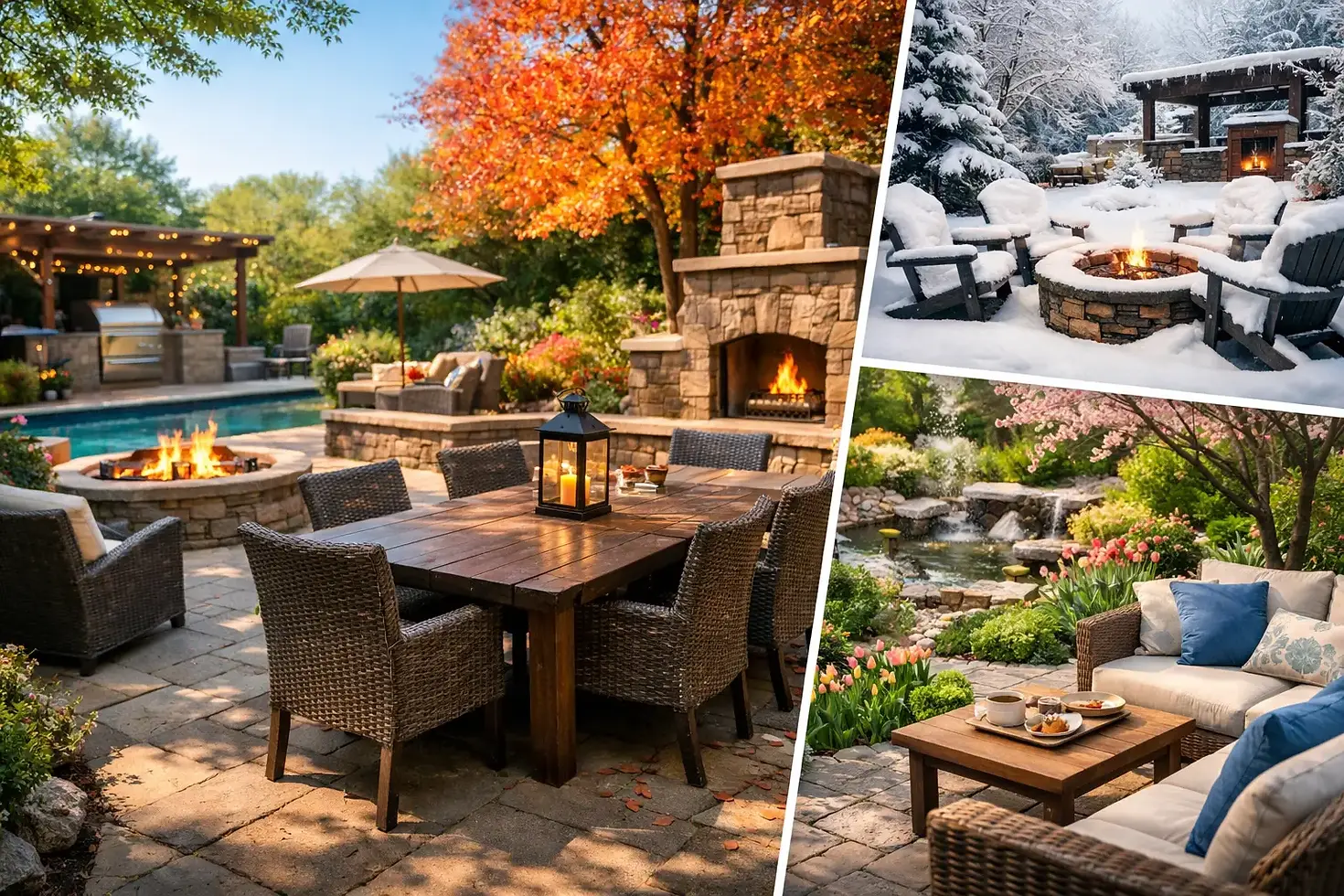
Four Season Backyard Design That Gets Used
- Amber Creek Design

- Jun 7
- 6 min read
A backyard that only feels useful from late June through early September is not really part of the home. In Boulder County, where bluebird winter mornings can be just as inviting as cool summer evenings, four season backyard design is about making outdoor living feel natural in every month, not just during peak patio weather.
That shift starts with a different question. Instead of asking, “What should we build back here?” the better question is, “How do we want to live here in April, in July, in October, and in January?” The answer changes everything. A deck becomes a place for sunrise coffee with a warm throw nearby. A patio becomes the setting for shoulder-season dinners. Lighting turns an early winter sunset into the start of the evening rather than the end of it.
What four season backyard design really means
Four season backyard design is not about cramming every outdoor feature into one space. It is about creating a backyard that feels comfortable, beautiful, and purposeful through changing weather, shifting daylight, and the real routines of family life.
In Colorado, that means designing with sun, wind, snow, shade, and temperature swings in mind from the start. A yard that looks beautiful in a midsummer photo can still feel exposed in March or unusable after sunset in October. The most successful outdoor spaces are planned around those edges. They give you places to gather when the air turns crisp, sheltered corners when the sun is intense, and visual warmth when the landscape is quiet.
This is where homeowners often feel the gap between a basic construction project and a true outdoor living environment. A contractor can install a patio. A thoughtful design-build team considers where winter sun lands at 2 p.m., how guests move from kitchen to grill, and whether the space still feels inviting when the trees are bare.
Designing for how you actually live outdoors
The best backyard transformations begin with lifestyle, not features. If your family tends to eat outside three nights a week in summer, your dining area should not feel like an afterthought. If you love hosting but end up moving everyone indoors after dark, the issue may not be square footage. It may be comfort, lighting, or flow.
A strong four season backyard design usually includes a few distinct but connected zones. There may be a dining space close to the home for easy serving, a lounge area that feels a little more tucked away, and a focal point such as a fire feature or water feature that gives the space a sense of arrival. The goal is not to make the yard feel busy. It is to make it feel complete.
For some homes, that means a custom deck that extends the main living level and opens views. For others, it means a grounded patio with layered plantings, stonework, and low lighting that creates a more intimate feel. It depends on the architecture of the house, the grade of the lot, and the way the homeowners want the space to function day to day.
The elements that make a backyard work in every season
Comfort needs to be built in
Year-round enjoyment rarely happens by accident. It comes from designing comfort into the space from the beginning. Shade structures, privacy screening, wind buffers, and fire features all influence how long a backyard stays usable through the year.
In summer, overhead structure can soften intense afternoon sun and make outdoor dining more pleasant. In cooler months, a fireplace or fire pit creates a natural gathering point and extends the evening. Even the placement of built-in seating matters. A bench that catches morning light in spring may become a favorite spot far more often than a chair set placed only for symmetry.
Materials need to match the climate
Colorado weather is beautiful, but it is not gentle. Freeze-thaw cycles, UV exposure, snow, and dry air can quickly reveal the difference between a budget-minded build and one designed to last.
Premium materials do more than elevate appearance. They hold up better, age more gracefully, and protect the investment over time. Natural stone, high-quality pavers, durable decking, and properly integrated drainage all support the long-term success of the space. Good design should feel beautiful on day one, but it should also still feel dependable after many seasons of use.
Lighting changes everything
One of the most overlooked parts of four season backyard design is lighting. In practice, lighting is what allows a backyard to remain active and welcoming when days get shorter.
Layered lighting creates mood, safety, and rhythm. Path lighting guides movement. Step lighting adds confidence and polish. Accent lighting on trees, stonework, or water features gives the yard dimension after dark. That matters in every season, but especially in fall and winter when outdoor time often happens in the early evening rather than at sunset.
Planting should support the full year, not one month
A backyard that peaks for six weeks in summer and fades the rest of the year can feel unfinished. Planting design should give the eye something to enjoy in every season.
That may include evergreen structure, ornamental grasses, bark texture, seasonal blooms, and carefully chosen trees that frame the space even after leaves drop. In a well-composed landscape, winter still has shape. Fall still feels rich. Spring feels fresh without looking sparse. The garden does not need to be loud year-round, but it should always feel considered.
Why flow matters as much as features
Luxury outdoor spaces are not defined by how many amenities they include. They are defined by how naturally everything works together.
A beautiful outdoor kitchen loses value if it sits too far from the indoor kitchen to be convenient. A fire feature can feel disconnected if guests have to cross a dark lawn to reach it. A water feature may be visually striking, but if it competes with the dining area rather than anchoring it, the space can feel unsettled.
This is why integrated planning matters. The most memorable backyards feel easy to use because the layout has been resolved with care. Materials relate to the home. Circulation feels intuitive. Every zone supports the next. The space invites people to stay longer because nothing about it feels forced.
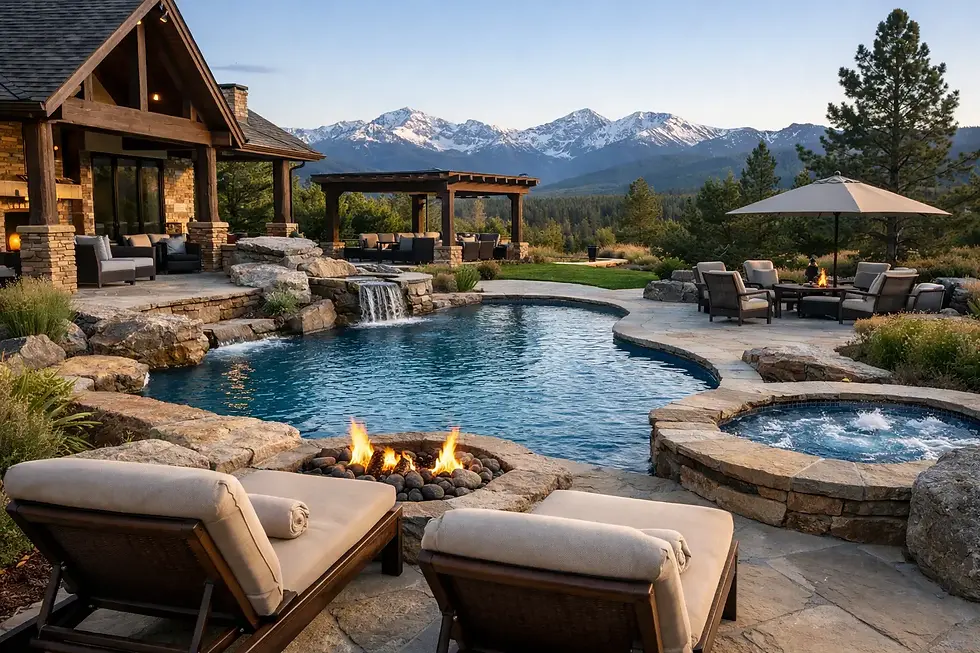
For homeowners in Boulder, Louisville, or Eldorado Canyon, that sense of cohesion is especially important because the landscape itself is often such a major asset. Views, mature trees, natural grade changes, and existing architecture should shape the plan rather than fight it. Good design does not overwrite what is special about a property. It brings it forward.
Four season backyard design in Colorado comes with trade-offs
Not every yard needs every element, and not every design priority carries equal weight. A larger covered structure may increase comfort but reduce open sky. A darker paver can feel richer and warmer in spring and fall but may hold more heat in summer. A sunniest seating area may be wonderful in winter and less comfortable in July.
This is where expert guidance becomes valuable. The right solution depends on how you want to use the space most often. If your priority is entertaining large groups, layout and circulation may matter more than secluded corners. If your priority is quiet daily living, the best investment may be layered seating, lighting, and a stronger connection to the indoors rather than more square footage.
A personalized planning process helps sort through those choices with clarity. At Amber Creek Design, that kind of planning is what turns a collection of upgrades into a backyard that genuinely supports the way a family lives.
Building a backyard that becomes part of the home
The real promise of four season backyard design is not simply longer use. It is a different relationship with your home.
When the backyard is designed well, it starts to absorb more of daily life. Coffee moves outside earlier in the year. Family dinners linger a little later into fall. Children play in spaces that feel intentional and close at hand. Guests settle in naturally instead of gathering for a few minutes before everyone drifts back indoors.
That is the difference between an underused yard and a destination just outside your door. It is not about adding more for the sake of more. It is about shaping a place that feels inviting in every season, so the life you want to live at home has room to happen there.
If your backyard has never quite matched the quality of the home it surrounds, that is usually not a sign that you need a few isolated upgrades. It is a sign that the space is ready for a more thoughtful vision.


Comments