

How to Design an Entertainment Patio
- Amber Creek Design

- Jun 5
- 6 min read
A patio that looks beautiful in a photo can still fall flat the first time you host. The grill is too far from the table. Guests crowd one corner while the rest of the yard sits empty. The fire feature feels inviting, but there is nowhere to set a drink. When homeowners ask how to design an entertainment patio, the real question is usually deeper: how do you create an outdoor space that feels natural to gather in, easy to use, and genuinely connected to the way your family lives?
The answer starts with experience, not square footage. A successful entertainment patio is not just a paved surface with furniture on top. It is a sequence of spaces designed around movement, comfort, and atmosphere. It should support a quiet morning coffee just as gracefully as a birthday dinner, a neighborhood cocktail hour, or a late summer evening with family under the lights.
How to Design an Entertainment Patio Around Real Life
The first design decision is not material or color. It is how you actually want the space to perform. Some families entertain around food, with long dinners and an outdoor kitchen that becomes the center of the evening. Others want a more relaxed setting with lounge seating, a fire feature, and room for conversation after sunset. Some need a patio that can do both without feeling crowded or confused.
That is why the most useful starting point is a simple one: picture your ideal gathering. How many people are there? Are children moving in and out of the yard? Is music playing while dinner is prepared? Do guests stay seated for a meal, or drift between conversation areas? The more clearly you can imagine the rhythm of the space, the better the layout will be.
This is where many patios go wrong. They are designed as a collection of features rather than a complete environment. A built-in grill, a dining table, and a fire pit may all be desirable, but without intentional spacing and transitions, the patio can feel busy instead of welcoming. Good design gives each activity a place while keeping the whole space visually and functionally connected.
Start With Zones, Not One Flat Surface
An entertainment patio works best when it is organized into purposeful zones. That does not necessarily mean walls, railings, or dramatic level changes. Often, subtle shifts in paving pattern, furniture placement, planters, or lighting are enough to create structure.
Most entertainment patios benefit from at least two primary zones: one for dining and one for lounging. If you love to host, a third support zone for cooking, serving, or beverage storage often makes the entire space easier to use. These zones should feel adjacent, not isolated. Guests should be able to move between them without weaving around obstacles or squeezing past chairs.
The size of each zone depends on how you entertain. If your gatherings revolve around dinner, the dining area may deserve the best orientation and the most generous footprint. If your evenings tend to linger around a fire table with a glass of wine, the lounge zone may be the emotional center of the patio. There is no single correct formula. The right balance comes from understanding what happens there most often, not only what looks balanced on a plan.
In Boulder County, views and sun exposure also shape these decisions. A dining area that catches harsh late afternoon sun may be less comfortable than one positioned for softer evening light. A lounge area tucked out of the wind can become the space everyone gravitates toward in shoulder seasons.
Build the Layout Around Flow
One of the clearest signs of a well-designed patio is that no one notices the layout. People simply move through it easily. That kind of ease takes planning.
Circulation matters more than most homeowners expect. There should be enough room to pull out dining chairs without blocking a walkway. Guests should be able to carry plates from the outdoor kitchen to the table without crossing through the main conversation area. If the patio connects to the home through a kitchen or great room, that threshold should feel direct and generous, not pinched or awkward.
Flow also includes the relationship between the patio and the rest of the yard. If children run out to play, if guests spill onto the lawn during a party, or if a water feature creates a visual destination beyond the patio, those transitions should feel intentional. The best outdoor living spaces are not isolated platforms. They are integrated with the architecture of the home and the movement of the landscape.
Choose Features That Support Hosting
It is easy to overbuild an entertainment patio with features that sound appealing but do not match your habits. The better approach is to invest in elements that remove friction from hosting.
If you cook outside often, an outdoor kitchen can transform the experience. It keeps the host connected to guests instead of disappearing indoors, and it creates a natural social anchor. But the design matters. A grill by itself may be enough for one household, while another benefits from refrigeration, counter space, storage, and bar seating. More is not always better. The goal is to support the way you entertain without adding complexity you will rarely use.
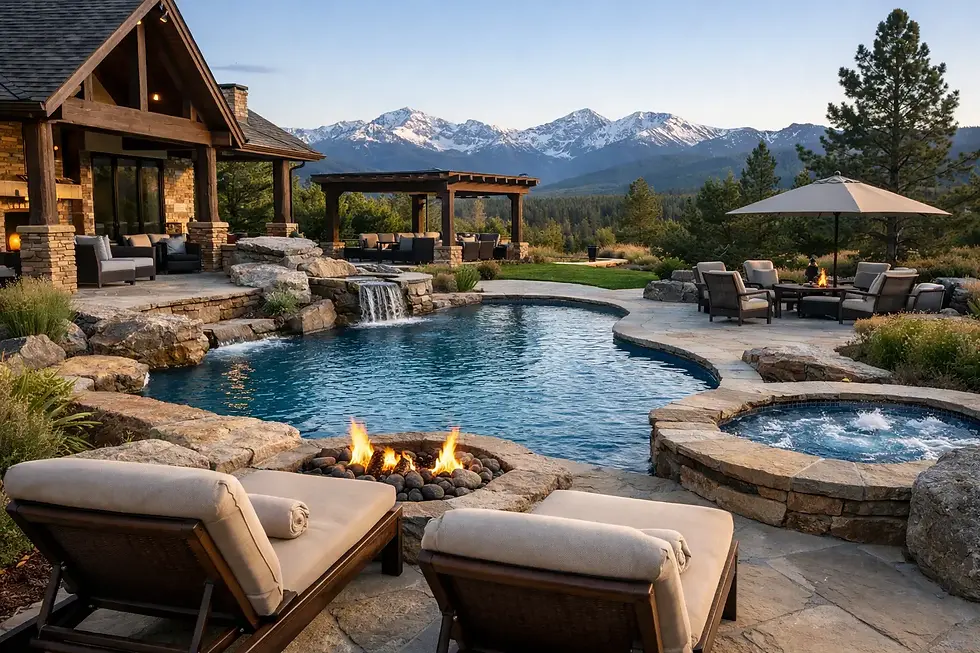
Fire features are another strong example of design with emotional payoff. They extend the season, create intimacy, and give the patio a focal point after dark. But they work best when paired with comfortable seating and practical surfaces nearby. A beautiful fire pit surrounded by furniture that is too far away or too upright will never be as inviting as it could be.
Lighting often has the biggest effect on mood and the least visual bulk during the day. Layered lighting can make a patio feel finished in a way furniture alone cannot. Task lighting near cooking areas, soft ambient lighting around seating, and gentle landscape lighting along paths all contribute to comfort and confidence after sunset.
Materials Matter More Than You Think
If you are investing in a premium outdoor living space, materials are not only an aesthetic decision. They influence comfort, longevity, maintenance, and the way the patio relates to your home.
In Colorado, freeze-thaw cycles, intense sun, and seasonal swings demand thoughtful material selection. Natural stone can feel timeless and grounded, while high-end pavers offer consistency and flexibility. Wood accents can add warmth, though they may require more maintenance than composite or masonry alternatives. The right palette should complement the home’s architecture and the character of the property rather than compete with it.
Texture matters too. A patio should feel elegant without becoming slippery, harsh, or visually busy. Lighter tones can help reduce surface heat in sunny exposures, while richer colors may better tie into the surrounding landscape. There are trade-offs in every direction. The best material choices balance beauty, performance, and the level of upkeep you are realistically willing to maintain.
Comfort Is What Makes People Stay
A patio can be visually stunning and still feel unwelcoming if comfort is treated as an afterthought. Entertainment spaces succeed when they invite people to settle in.
Shade is a major part of that equation. In some settings, a pergola creates structure and filtered light. In others, a covered patio or pavilion offers stronger protection from sun and occasional weather. The right solution depends on orientation, architecture, and how long you want to use the space throughout the day and across seasons.
Furnishings also deserve more thought than a quick showroom decision. Deep lounge seating encourages guests to linger, but it needs enough surrounding space to avoid feeling crowded. Dining chairs should be comfortable enough for a long meal, not only visually coordinated. Side tables, serving surfaces, and built-in seat walls all contribute to the ease of gathering.
Then there is the atmosphere created by the landscape itself. Planting softens hardscape, adds privacy, and helps the patio feel established rather than exposed. In a thoughtfully designed yard, the planting is not decoration added at the end. It is part of the experience from the beginning.
How to Design an Entertainment Patio for Colorado Living
Designing for Colorado means thinking beyond peak summer. A well-planned entertainment patio should feel usable across more of the year, especially in a place where sunny winter afternoons and crisp fall evenings can still draw people outside.
That may mean orienting seating to capture warmth, incorporating overhead cover for variable weather, or using landscape lighting to make shorter days feel inviting. It may also mean choosing durable finishes and construction methods that protect the investment over time.
For many homeowners, this is where professional design becomes especially valuable. A patio is not just a standalone project. It is part of a broader outdoor environment with architecture, drainage, grading, views, privacy, and seasonal use all in play. Companies like Amber Creek Design approach these spaces as complete lifestyle settings, which is often the difference between a backyard that looks improved and one that truly changes how you live at home.
The most memorable entertainment patios do not feel staged. They feel easy. Dinner moves outside without effort. Kids drift between the yard and the table. Guests stay longer than planned because the space is comfortable, warm, and quietly beautiful. If you design for those moments first, the patio becomes more than a place to entertain. It becomes one of the most lived-in parts of your home.


Comments