

How to Light Outdoor Spaces That Feel Lived In
- Amber Creek Design

- Jun 13
- 6 min read
A beautiful backyard can disappear at dusk if the lighting is treated as an afterthought. The right plan changes that completely. When homeowners ask how to light outdoor spaces, what they usually want is not simply brightness. They want a backyard that still feels welcoming after sunset - a place for dinner on the patio, a quiet glass of wine near the fire feature, or a path that guides guests comfortably to the gate without flooding the yard in glare.
That distinction matters. Good outdoor lighting is less about adding fixtures and more about shaping experience. It should help your space feel calm, usable, and connected to the home. It should also respect the landscape, the architecture, and the rhythm of how your family actually lives outside.
How to light outdoor spaces with intention
The best lighting plans begin with one simple question: what do you want the yard to feel like at night? For some homeowners, the priority is relaxed entertaining. For others, it is safety around steps, pool edges, or sloped walkways. In many Boulder County backyards, it is both.
Lighting works best when it follows the logic of the space rather than competing with it. A dining patio needs a different kind of light than a garden path. A water feature benefits from subtle illumination that catches movement and reflection, while a play area or transition zone often needs clearer visibility. When every area is lit the same way, the whole yard feels flat. When each area is lit according to purpose, the space feels layered and natural.
This is where many homeowners go wrong with a quick retail solution. A scattering of solar stakes may mark a border, but it rarely creates atmosphere. Oversized floodlights may improve visibility, but they can wash out the texture of stone, flatten plantings, and make the yard feel exposed rather than inviting. A thoughtfully designed system balances safety, beauty, and mood at the same time.
Start with the places people actually use
If you are deciding how to light outdoor spaces, begin with the living areas that support everyday routines. The patio where you gather for dinner, the deck where you step out with coffee, the outdoor kitchen where guests naturally linger - these deserve priority because they carry the most activity.
In these areas, lighting should make people feel comfortable without calling attention to the fixture itself. That often means warm, downward-focused light that defines seating areas and cooking surfaces while keeping the overall environment soft. A grill station needs task lighting strong enough to cook confidently. A lounge area needs a gentler touch so faces look warm and conversation feels easy.
The transition between these zones matters just as much as the zones themselves. Steps, changes in elevation, and narrow passages should never disappear into shadow. At the same time, they should not be so bright that they interrupt the mood of the whole yard. The goal is quiet guidance.
Layer light instead of flooding the yard
One of the most common mistakes in outdoor lighting is trying to solve every need with a single type of fixture. That approach usually leads to either under-lighting or over-lighting. Strong design comes from layers.
Ambient lighting sets the tone of the space. This is the general glow that helps a patio or garden feel present after dark. Task lighting supports function, especially in outdoor kitchens, stair runs, gate areas, and entries. Accent lighting brings focus to the details that make a yard memorable, such as the bark of a mature tree, the movement of a water feature, or the stonework on a custom wall.
When these layers work together, the backyard feels complete. You notice the experience before you notice the equipment. That is usually the sign of a well-designed plan.
There is also a practical benefit to layering. It gives you more control. You may want brighter light near the grill during a gathering but a softer look across the garden once dinner is over. A layered system can support both moments without compromise.
Use lighting to reveal architecture and landscape
A premium outdoor space should feel just as considered at night as it does during the day. Lighting plays a major role in that. It can emphasize the craftsmanship of a patio edge, give depth to planting beds, and visually connect the backyard to the home.
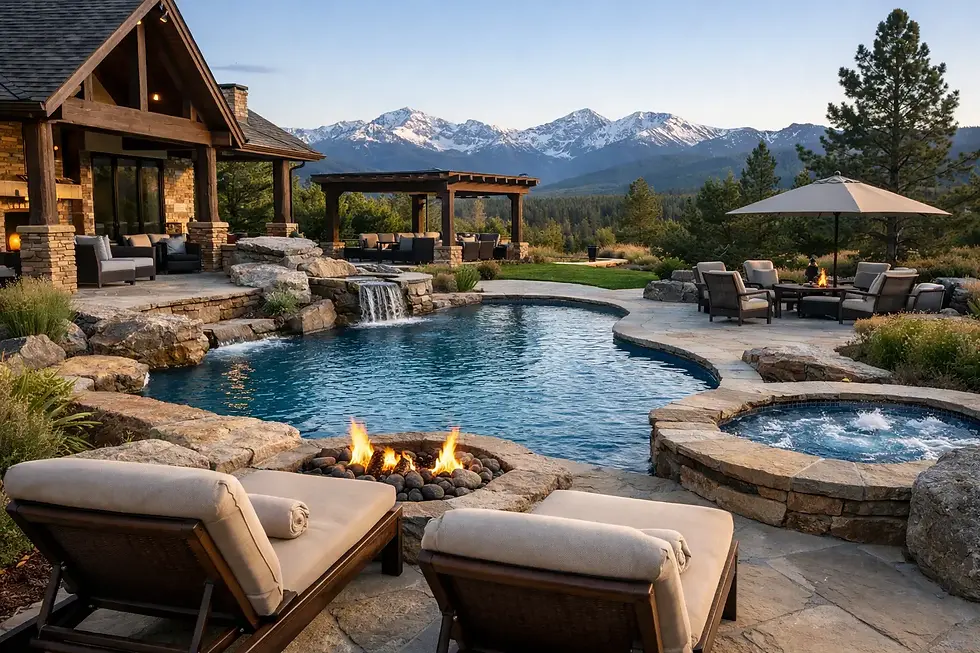
This is especially effective when the lighting plan responds to the materials already in the space. Natural stone, wood, water, and planting textures all react differently to light. Soft grazing light can bring out the texture in masonry. Carefully placed uplighting can give a sculptural tree presence without making it theatrical. Subtle lighting around a pond or water feature can introduce reflection and motion that changes the entire atmosphere of the yard.
The trade-off is restraint. Too much accent lighting can make a landscape feel staged. Too little and the best details disappear. In most high-end outdoor environments, the strongest result comes from editing carefully. Not every feature needs to be highlighted. The right few often do more than the whole catalog.
Choose warmth over harsh brightness
Homeowners often assume brighter means better. In outdoor living spaces, that is rarely true. Harsh light can make even a beautifully built patio feel commercial. It creates glare, sharp shadows, and a sense that the yard is on display instead of ready to be enjoyed.
Warm light is usually the better choice for residential settings because it flatters people, materials, and planting. It supports the feeling most families want in the evening: relaxed, intimate, and comfortable. That does not mean every light should be dim. It means brightness should be purposeful.
Think of it this way. Your guests do not need to feel like they are standing under stadium lights to walk safely from the patio to the lawn. They need to feel oriented and at ease. The same principle applies to entertaining areas. People linger longer where the lighting is kind to the eye.
Plan for Colorado conditions
In Boulder County, outdoor lighting has to do more than look good on installation day. It has to perform through snow, freeze-thaw cycles, intense sun, and seasonal changes in how the yard is used. That makes fixture quality and placement especially important.
Low-grade products often fail where premium systems hold up. Materials matter. Installation matters even more. Wiring, drainage awareness, fixture placement, and the way the system integrates with hardscape and planting all affect long-term reliability. A beautiful lighting plan is only successful if it continues working season after season.
It is also worth thinking about how your property changes across the year. Summer entertaining may center around the outdoor kitchen and dining patio. In cooler months, the focus may shift to a covered space, spa area, or fire feature. Lighting should support those changing patterns instead of locking the yard into one use case.
How to light outdoor spaces without making them feel busy
The most elegant outdoor lighting often feels almost invisible. You notice that the yard is comfortable, that paths are easy to follow, that the garden has depth, and that the patio still feels inviting at 8:30 pm. What you do not notice is a clutter of fixtures competing for attention.
That is why a unified lighting plan matters. When lighting is added piece by piece over time, the result can feel disconnected. One fixture solves a dark corner, another gets added near the grill, and another appears by the driveway. Eventually the property has light, but not cohesion.
A better approach is to think about the entire experience from the beginning. Where do people arrive? Where do they pause? Where do they gather? Where do they move from one zone to another? Answering those questions leads to a lighting plan that feels calm, organized, and deeply intentional.
For homeowners investing in a custom outdoor environment, this is where professional design makes a visible difference. At Amber Creek Design, lighting is not treated as a finishing touch. It is part of how a backyard becomes a destination - one that feels just as compelling after dark as it does in daylight.
The right outdoor lighting does something subtle but powerful. It extends the life of the space. It turns a patio into an evening room, a path into an invitation, and a backyard into part of the way your family lives every day. If you are planning your next outdoor project, think beyond what needs to be seen and consider what deserves to be felt.


Comments